
BYD releases the "Eye of Heaven" advanced intelligent driving system for all models, promoting the scale and popularization of intelligent driving technology
Intelligent driving will become a new business card for Chinese cars! "On the evening of February 10th, BYD's first press conference for the Year of the Snake was held at its headquarters in Pingshan. This conference focused on its intelligent strategy and attracted attention from all parties. BYD Group Chairman and President Wang Chuanfu stated on site that the company will launch a full scenario advanced intelligent driving system called" Eye of the Heavenly God ", which will be installed in all BYD models. This not only means that intelligent driving technology will enter a new stage of scale and popularization, reshaping the entire new energy vehicle industry pattern, but also using Shenzhen as a pivot to promote China's global leading intelligent driving industry.
The reporter learned on site that the advanced intelligent driving system "Tenjin Eye" is divided into three versions: A, B, and C. Among them, "Tenjin Eye C" is a three eyed version, mainly equipped on the BYD brand. The core competitiveness of "Eye of the Heavenly God" comes from BYD's self-developed technology system, which achieves comprehensive advancement in four dimensions: architecture, sensors, algorithms, and data.
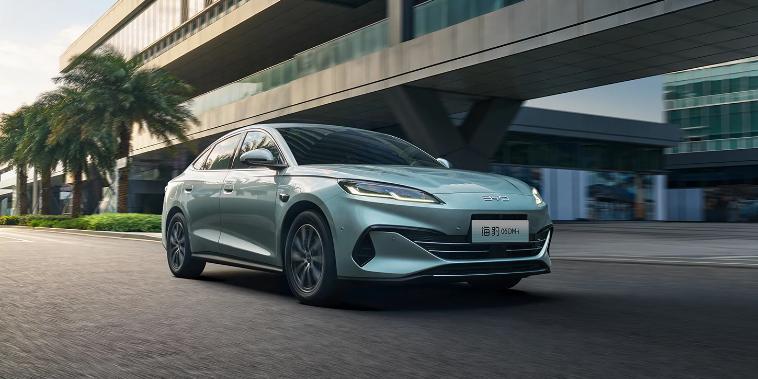
In terms of sensors, BYD's globally unique and fully stack self-developed forward-looking three eye 5R12V12U, consisting of 3 forward-looking three eye sensors, 5 millimeter wave radars, and 12 ultrasonic radars, has a height, width, depth, and ranging accuracy of up to 1cm. Yang Dongsheng, Senior Vice President of BYD Group and Dean of the Automotive New Technology Research Institute, introduced that BYD has built a "sensor chain evaluation system" to meet the requirements of sensor detection distance and range in various scenarios. The advanced intelligent driving is achieved through the 'Erlang Shen' three eye camera scheme, and the interference of weather and light on vision is compensated by millimeter wave radar, which is far superior to the pure visual scheme.
The architecture of 'Eye of Heaven C' is advanced, and the Xuanji architecture based on vehicle intelligence is the soul. ”Yang Dongsheng stated that the Xuanji architecture is composed of "one brain, two ends, three networks, and four chains", providing a safety base for the "Eye of the Heavenly God" that surpasses human driving skills. From the design of sensors, to perception, regulation, and precise control of actuators, achieving a fully closed-loop system is the true "end-to-end" approach. We have conducted in-depth research on core technologies such as intelligent driving sensors, controllers, and actuators. Based on the Xuanji architecture, we use the data chain as a link to deeply integrate the sensing chain, control chain, and mechanical chain, in order to achieve a 'fully closed-loop end-to-end' system. Only BYD can achieve this.
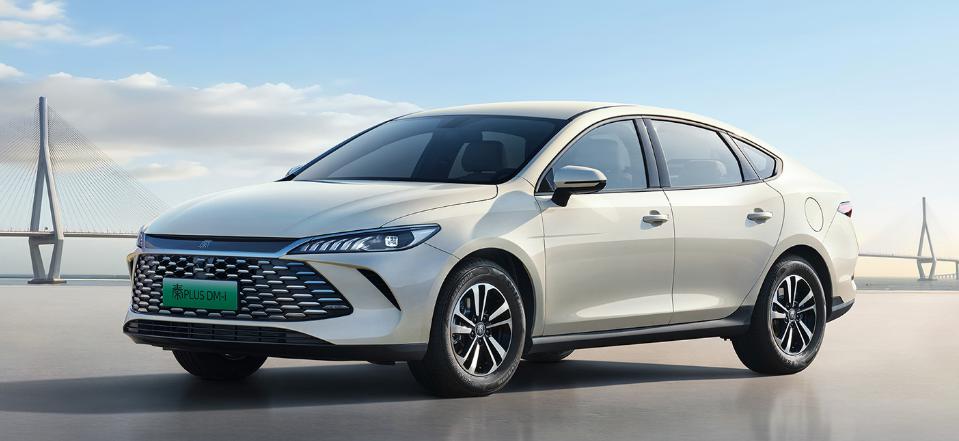
As early as 2018, BYD proposed that the first half of the new energy vehicle industry should be electrification, and the second half should be intelligence. With technological innovations such as blade batteries and DM, BYD achieved a significant lead in the first half of electrification. According to the data, BYD ranked fifth globally with 4.27 million vehicles sold in 2024, a four place jump from last year, marking a new peak for Chinese car companies going global.
In the second half of intelligentization, Wang Chuanfu believes that the underlying logic of intelligent driving has changed, shifting from rule driven to data-driven big models, and good big models are fed by data. From the test data, BYD's intelligent driving model iterates every seven days, with an additional training mileage of 72 million kilometers per day in 2024 and an expected training mileage of 150 million kilometers per day by the end of 2025.
BYD has taken the lead in releasing the national intelligent driving strategy, and the key lies in three major strengths, "said Wang Chuanfu. BYD has a huge data advantage and has sold over 4.4 million vehicles equipped with L2 and above driving assistance, building the largest vehicle cloud database in China; At the same time, BYD also has the world's largest R&D engineer team, with over 110000 R&D personnel, including more than 5000 intelligent driving engineers, which can achieve full stack self-developed software and hardware; Relying on the world's largest production and manufacturing system for new energy vehicles, BYD can drive the coordinated development of the entire upstream and downstream industry chain and accelerate the popularization of intelligent driving.
It is worth noting that BYD announced on site that the Xuanji architecture has fully integrated with DeepSeek, based on cloud based big models in intelligent driving, utilizing DeepSeek's strong knowledge and reasoning capabilities to significantly improve the efficiency and quality of automated data generation, and solve more conventional scenarios.
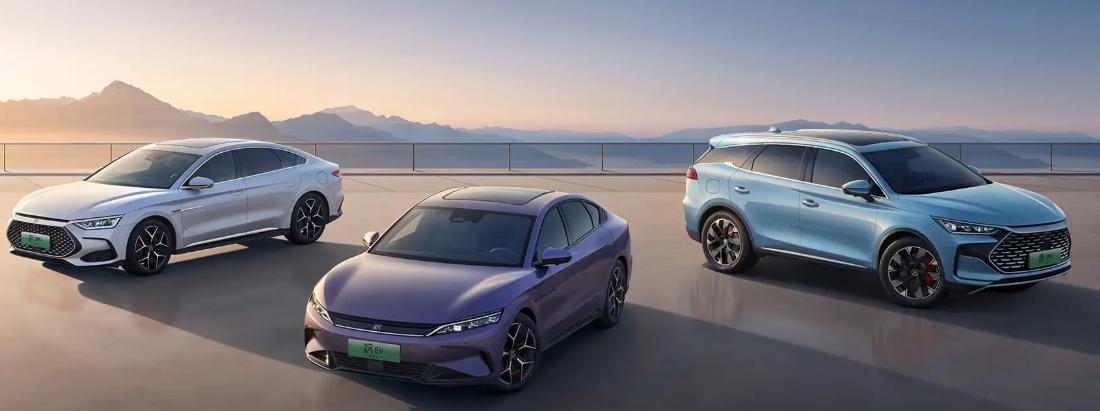
In 2025, when buying a car, look at smart driving. In the next 2 to 3 years, advanced smart driving will become an essential configuration like seat belts and airbags. Wang Chuanfu believes that China has become a new highland of global smart driving innovation, leading the direction of global smart driving development.
With the gradual increase in the penetration rate of new energy vehicles, the aftermarket of new energy vehicles is becoming a key area for industrial development. The one-stop comprehensive service platform for new energy vehicles to go global will integrate shipping, logistics, inspection and quarantine, insurance and other links, allowing Chinese cars to be sold directly worldwide.